

El Badii Palace: the ruins of a palace that rivaled the Alhambra
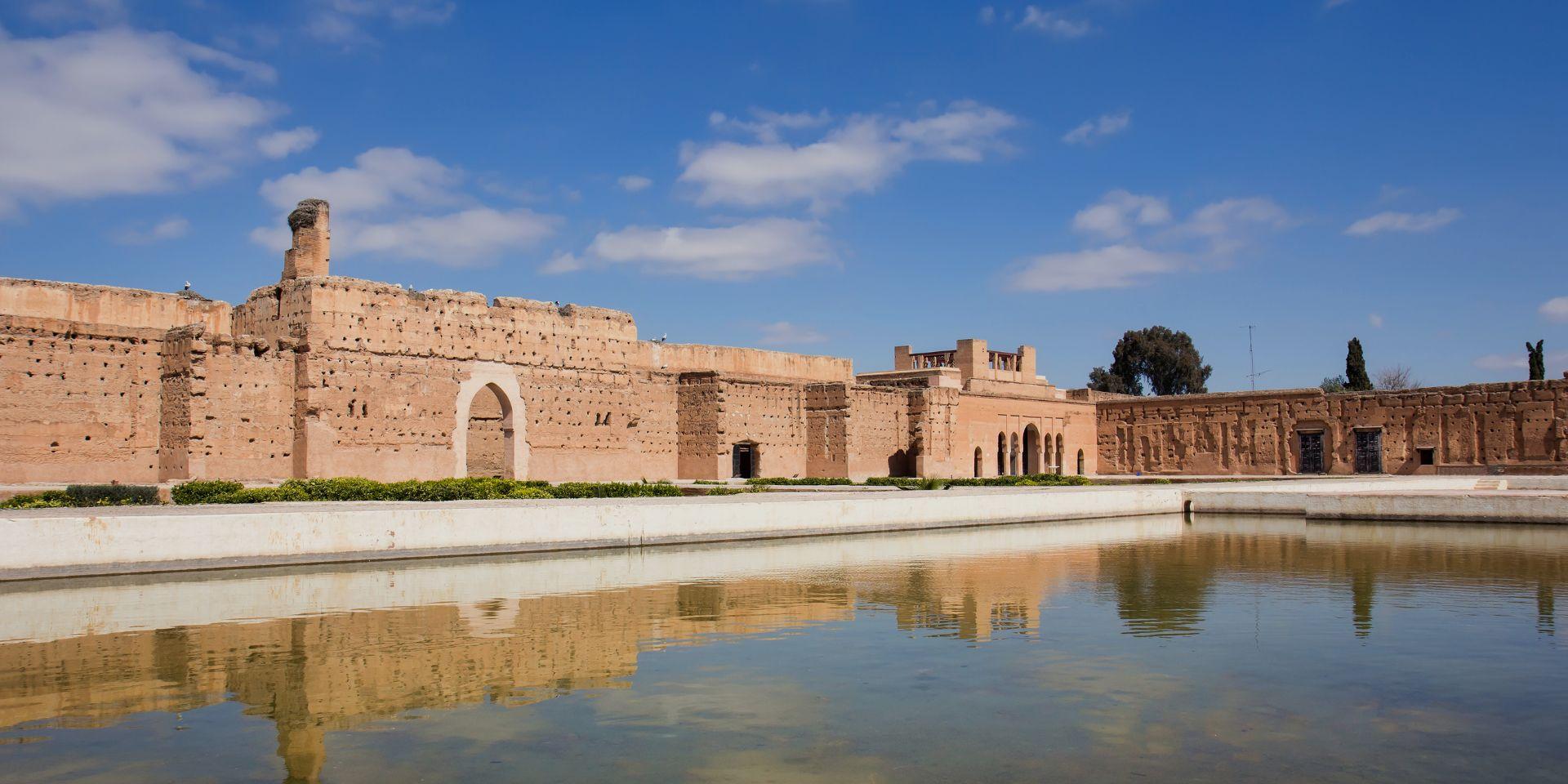
The El Badii (or El Badi) Palace remains one of the most impressive sites in Marrakech, not for its intact splendor, but for what it reveals about Saadian excess. Built between 1578 and 1594 by Sultan Ahmed al-Mansur to celebrate his victory over the Portuguese (Battle of the Three Kings), this palace had 360 rooms decorated with gold, turquoise, Italian crystal, and Sudanese marble.
Why are these ruins still so fascinating?
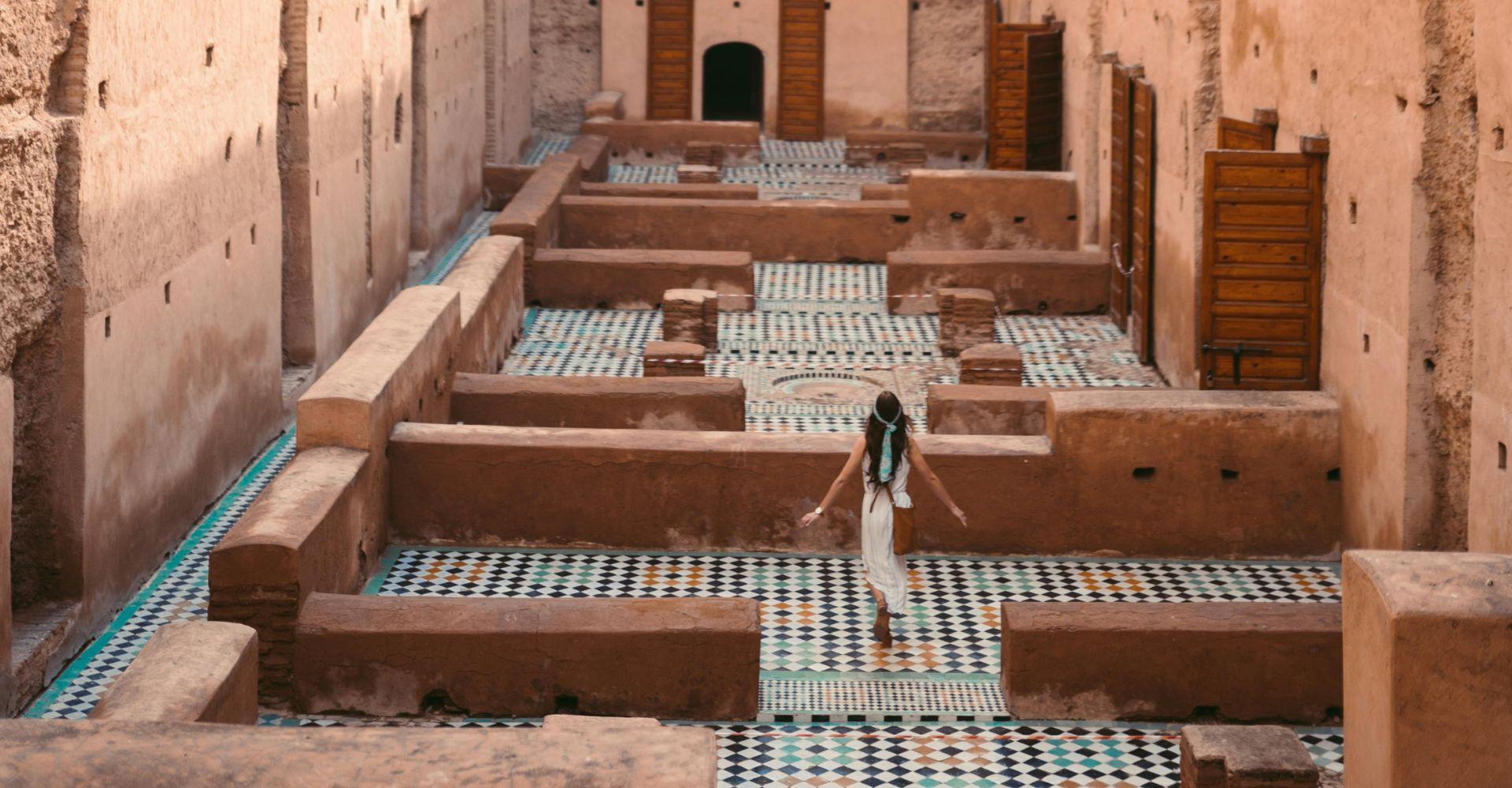
Destroyed in the 17th century by Sultan Moulay Ismail (who plundered gold and materials for Meknes), El Badii is now nothing more than a grandiose skeleton: high ochre arches, faded zellige walls, a huge courtyard of orange trees with a central pool. Yet this “organized ruin” says everything about Saadian power: one can imagine the banquets, the harem (500 women), the dazzled ambassadors.
Walk slowly: each arch tells a story, each broken column evokes the golden age of Marrakech. This is a site to visit in the late afternoon: low light + the Koutoubia minaret in the background = the perfect photo.
Practical information (1 hour)
Opening hours: 9 a.m. to 5 p.m. (closed on certain public holidays)
Admission: 70 DH (a small price for a grand spectacle)
Location: Kasbah (south medina), near Bahia + Saadian Tombs
Tip: take an audio guide (French) OR visit with a local guide
Recommended itinerary: El Badii → Saadian Tombs (5 min) → Bahia Palace (10 min) = the perfect trio of Saadian heritage in 3 hours.
Key facts about El Badii Palace
Symbol of power: financed by Portuguese booty, rival to the Alhambra
Pharaonic scale: 16 years of construction, 2 hectares in size
Current state: ruins + peaceful gardens = unique atmosphere
Best time to visit: spring (orange trees in bloom)
The El Badii Palace proves that Marrakech excels in the art of transforming ruins into masterpieces. Less touristy than Jemaa el-Fna, more contemplative than the souks, it is the place for history buffs who want to understand the past grandeur of the medina.